

Understanding Roof Sheathing: Its Role and Significance
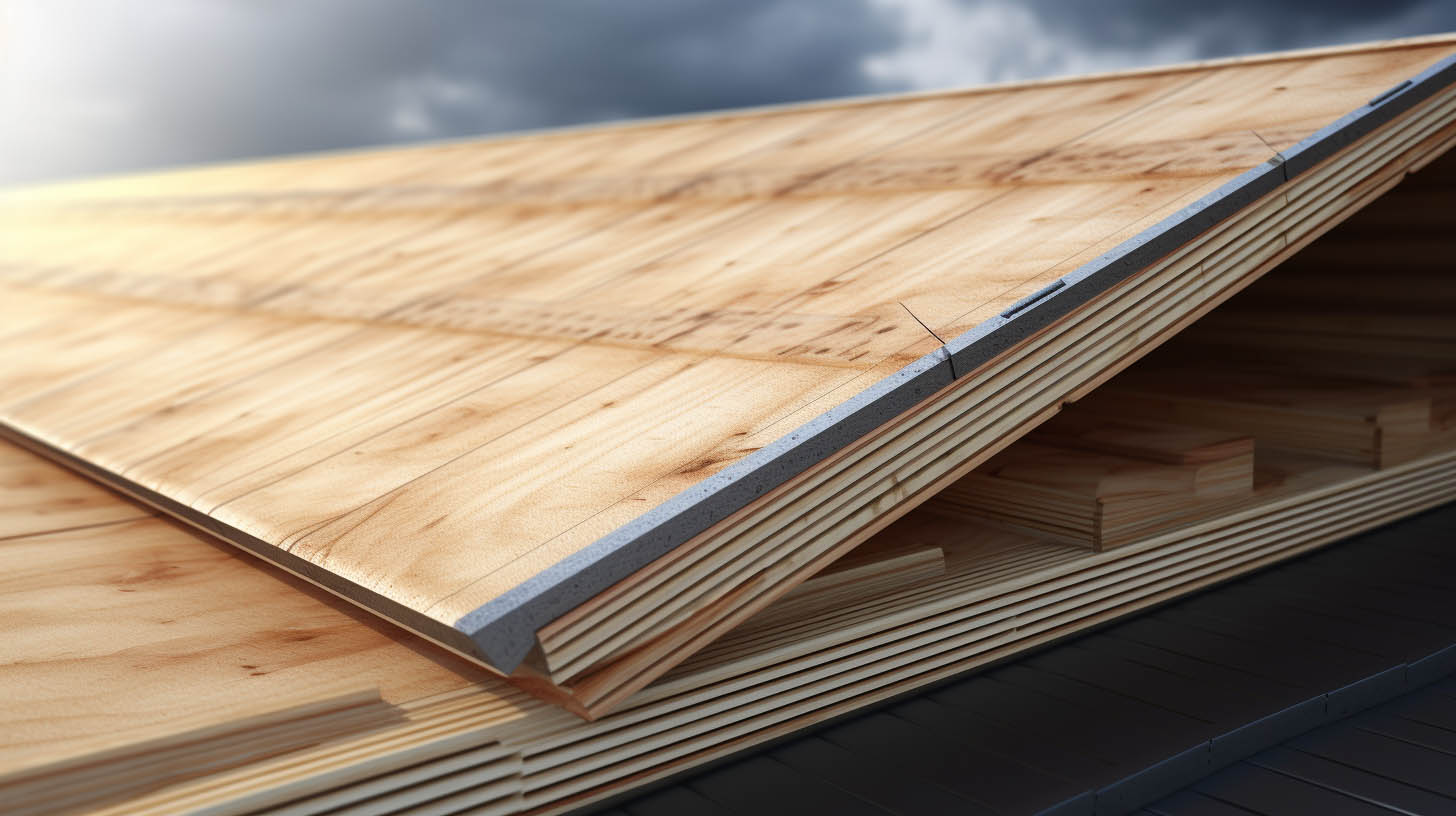
Roof sheathing forms the foundation of your roofing system, providing a stable base for roofing materials and ensuring structural integrity. It’s a critical component in roofing construction, acting as a barrier against environmental elements and distributing weight evenly across the roof structure. The right sheathing thickness is crucial for maintaining the longevity and safety of your roof.
Key Considerations for Optimal Sheathing Thickness
Selecting the appropriate thickness for roof sheathing involves several factors:
Material Selection:
The type of sheathing material used directly affects the required thickness due to differences in strength, firmness, and load-bearing capacity. For example, both plywood and oriented strand board (OSB) are commonly used materials, but plywood is typically stronger so less of it is required. Since less product is needed, the thickness will be less. In contrast, when using OSB, more product might be needed to achieve the same level of performance, so the thickness would be greater.
Panel Dimensions and Truss Spacing:
The distance between roof trusses plays a crucial role in determining the necessary sheathing thickness. Wider spacing increases the span that the sheathing must support. When trusses are spaced farther apart, the sheathing must be thicker to prevent sagging. Thicker panels provide more structural stability, ensuring that the roof remains secure and durable over time.
Roofing Application and Environmental Factors:
Roof design, slope, local climate, and building codes are all key factors in determining appropriate sheathing thickness. In an area with a lot of snow or rain, steeper roofs with thinner sheathing is ideal. A flatter roof would require thicker, stronger panels to be able to support the weight of the precipitation. In areas with high winds or frequent storms, thicker sheathing is often required to withstand the constant impacts. Additionally, some local building codes set minimum thickness requirements to ensure the safety and durability of the roof, as well as comply with any required standards.
Recommended Thickness for Different Materials
Plywood:
Plywood sheathing is a popular choice in roofing due to its lightweight nature, structural strength, and excellent resistance to moisture. These qualities make it a well-suited option for various climates and roof designs. Plywood panels used for roof sheathing should be at least ½ inch thick. At this thickness, plywood is generally capable of spanning up to 32 inches between rafters or trusses without compromising stability or integrity. This makes it a practical and reliable option, especially for projects where durability and load-bearing capabilities are essential.
Oriented Strand Board (OSB):
OSB is a budget-friendly alternative to plywood that has become widely used in roof sheathing due to its affordability and reliable performance. Manufactured from compressed wood strands and adhesives, OSB offers impressive strength and moisture resistance when properly installed and sealed. For structural integrity, a minimum thickness of 15/32 inches is typically recommended when OSB is used over rafters or trusses spaced up to 24 inches apart. This ensures the sheathing can support expected loads without sagging or compromising the roof’s overall stability.
Metal Sheathing:
When installing metal roofing, a thickness of approximately ⅝ inch is generally recommended, as it offers the necessary strength and rigidity to handle the concentrated loads from metal roofing systems. Unlike other roofing types that may rely on numerous fasteners, metal roofs often use fewer but more robust fastenings. This added thickness helps prevent warping, increases resistance against storms and high winds, and contributes to the overall durability and performance of the roofing structure.
Advanced Roofing & Construction, LLC: Your Trusted Partner
At Advanced Roofing & Construction, LLC, we understand the importance of precise sheathing thickness for roof longevity and safety. Our expertise in roofing in Huntsville, AL, ensures that every project meets the highest standards of quality and durability.
Minimizing Risks with Proper Sheathing Thickness
Inadequate sheathing thickness can compromise your roof’s structural integrity, leading to sagging, leaks, and potential collapse. Ensuring the correct thickness is not just a matter of compliance but a critical safety measure.
Maximizing Roof Longevity with the Right Sheathing
A well-constructed roof sheathing not only supports the roofing material but also extends the lifespan of your roof. It’s an investment in your property’s future, safeguarding against environmental damage and wear.
Conclusion: The Foundation of a Strong Roof
In conclusion, the thickness of roof sheathing is a pivotal factor in roofing construction. It’s essential for the stability, safety, and longevity of your roof. As a leading roofing company in Huntsville, AL, we prioritize the use of optimal sheathing thickness in every project, ensuring that your roof stands the test of time and elements.