
If you’re a homeowner in Huntsville or Madison thinking about solar panels, the smartest move you can make starts on your roof. A solar ready roof in Alabama means your home is structurally prepared, properly oriented, and built with materials that can support a photovoltaic system for 25 to 30 years without costly modifications or premature replacements.
Alabama homeowners are in a strong position right now. Energy costs are climbing, solar incentives are real, and roofing technology has advanced enough that you can plan ahead instead of reacting. The U.S. Department of Energy’s guide to going solar is a solid starting point for understanding the full picture before you commit.
Why a Solar Ready Roof in Alabama Makes Financial Sense
Alabama gets more than 200 sunny days a year. Huntsville and Madison in particular have the sun exposure needed to make solar a genuinely worthwhile investment. But here’s what most homeowners don’t realize: if your roof isn’t ready when the solar installers show up, you’re looking at a panel removal, a new roof, and a reinstall. That’s a significant amount of money wasted.
A solar ready roof in Alabama starts with planning your roof replacement in Huntsville with solar in mind from the very beginning. You choose materials with the right lifespan, confirm the decking is solid, and verify structural load capacity before a panel ever gets mounted. Contractors who understand both roofing and solar prep assess your attic framing, sheathing condition, and the pitch and orientation of your roof all at once.
In Alabama’s climate, that structural assessment matters more than people realize. Heat cycles, humidity, and the occasional severe storm all affect how a solar ready roof performs under the added weight and wind exposure of solar panels.
Best Roofing Materials for a Solar Ready Roof in Alabama
Not every roofing material is a good fit for solar. Here’s a breakdown of what works and what to think about:
| Roofing Material | Solar Compatibility | Typical Lifespan | Alabama Suitability |
|---|---|---|---|
| Standing Seam Metal | Excellent | 40-70 years | High |
| Asphalt Architectural Shingles | Good | 25-30 years | Moderate to High |
| Tile (Concrete or Clay) | Fair | 30-50 years | Moderate |
| Wood Shake | Poor | 20-25 years | Low |
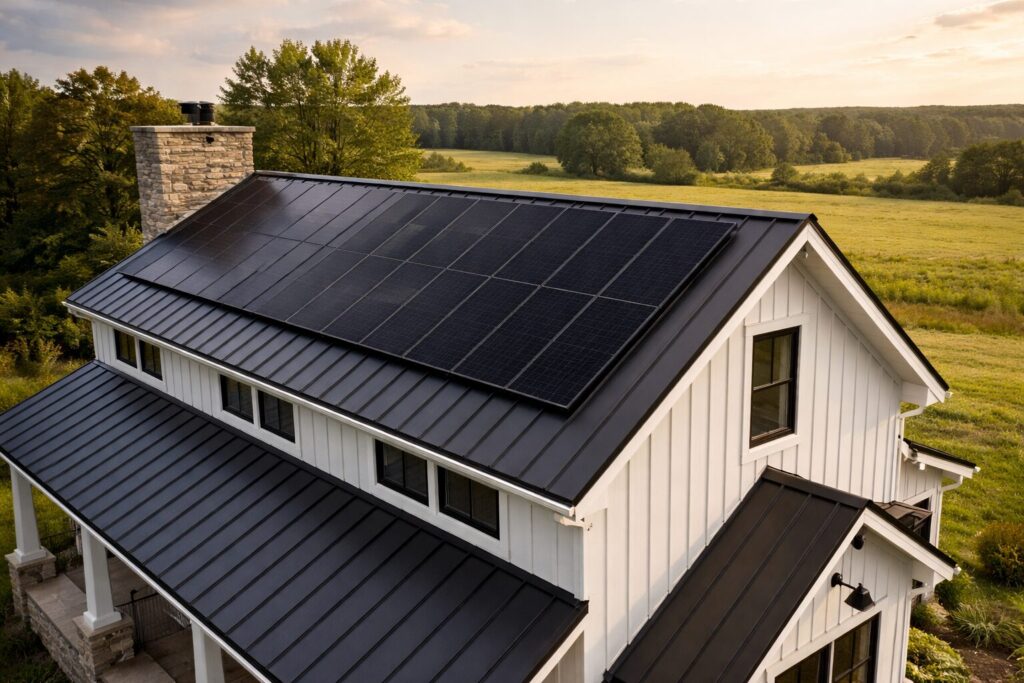
Metal roofing is the top choice for a solar ready roof in Alabama. Panels can be clamped directly to standing seam metal without penetrating the surface, which eliminates leak risk and reduces installation time. If you’re weighing your metal roofing options, that decision pairs naturally with solar planning because a metal roof’s lifespan aligns closely with a solar system’s performance window.
Architectural asphalt shingles are still a workable option if the roof is new and high-quality. The key is installing them with a minimum 25-year warranty so your roof life matches your solar investment.
Alabama Weather and What It Means for Solar Roofing Prep
Huntsville sits in a region that sees high summer heat, humid conditions, and periodic severe weather including thunderstorms and occasional tornado warnings. Any solar ready roof in Alabama has to hold up under those conditions, not just during installation but for decades afterward.
Flashing details matter a great deal here. Poor flashing around solar mounts is one of the most common failure points in Alabama installs, and it becomes a bigger problem when storms roll through. Making storm-resistant roofing upgrades part of your solar prep plan protects both your roof and your future panel investment.
Proper roof ventilation also plays a role. Solar panels generate heat on the surface beneath them, and if your attic isn’t ventilating well, that trapped heat shortens shingle life. A roofer familiar with solar roofing prep in Madison and Huntsville should evaluate your current ventilation setup as part of any pre-solar inspection.
Key Steps to Building a Solar Ready Roof in Alabama
Before any solar contractor visits your home, your roof should be ready to pass inspection. Here are the steps that matter:
- Have a licensed roofing contractor assess structural load capacity based on your framing and sheathing age
- Confirm your roof pitch and orientation for optimal panel placement (south-facing, 15 to 40 degree pitch is ideal)
- Replace any damaged or aging decking before installation begins
- Ensure flashing and penetrations are sealed to Alabama building code standards
- Verify your roof warranty covers third-party solar installs or get one that does
These aren’t just checkboxes. Each one prevents a real problem that shows up years later when something goes wrong with either the roof or the panels.
Financial Incentives for a Solar Ready Roof in Alabama
One of the biggest motivators for Alabama homeowners is the financial side. The federal residential clean energy tax credit currently allows you to claim 30% of qualifying solar installation costs. That applies to the panels and in some cases related roofing work directly tied to the solar install.
National Renewable Energy Laboratory research on solar energy confirms that properly installed solar systems on quality roofs perform consistently for 25 to 30 years. That’s decades of reduced utility bills, and the investment makes financial sense faster when you plan your solar ready roof in Alabama as one coordinated project rather than two separate ones.
Frequently Asked Questions
Not always, but your roof should have at least 10 to 15 years of life remaining. If it’s older or showing wear, planning a solar ready roof in Alabama before installation prevents costly removal and reinstall fees later.
Standing seam metal roofing is the top choice. It handles heat well, lasts 40 to 70 years, and allows clamp-based solar mounts that don’t penetrate the surface, making it ideal for a solar ready roof in Alabama.
They can, depending on the manufacturer. Always confirm with your roofing contractor that the warranty covers third-party solar installations before panels are mounted on your solar ready roof in Alabama.
Yes. The federal residential clean energy tax credit covers 30% of qualifying solar installation costs. Some roofing work directly tied to solar prep may also qualify. Consult a tax professional for your specific situation.
Look for contractors experienced in both roofing and solar integration. Ask specifically whether they assess structural load, decking condition, and flashing before installation begins on your solar ready roof in Alabama.