
Attic insulation is a critical component in maintaining the energy efficiency and comfort of your home’s roof. With various insulation types available, each offering unique benefits and drawbacks, it’s essential to understand which option best suits your needs. In this article, we’ll delve into the different types of attic insulation, focusing on their characteristics and how they can enhance your home’s performance.
R-Value and How to Compare Insulation Types
Many people are surprised to learn that there are multiple different insulation types to pick from. In general, they are broken down and classified by their so-called R-value, which compares their efficacy against one another. A higher R-value means heat is better contained within the space than a lower R-value. In other words, this means higher R-values have superior climate control and energy efficiency.
This R-value is the best way to compare different insulation types. The type of insulation, the thickness of the insulation, and the material used in the product all have an impact on the final R-value. Let’s dive into some of these common insulation types you are readily available so you can compare the types.
Spray Foam Insulation: Sealing the Gaps
Spray foam insulation stands out for its ability to fill crevices and form air pockets that effectively block heat and cold from entering your home. This type of insulation is particularly useful for sealing gaps and providing a high level of thermal resistance. However, it’s important to note that spray foam is heavier compared to other insulation types and can be challenging to control during application. Once set, it becomes difficult to remove, which might complicate future maintenance involving wires or other home systems.
Open-Cell versus Closed-Cell Spray Foam
A small, but important piece of spray foam is the open-cell versus closed-cell debate. Both types can excel in their role, but what exactly is the difference? Spray foam in general is made of a ton of tiny bubbles. Open-cell spray foam has these bubbles left open, creating a flexible, soft material. Closed-cell spray foam, on the other hand, has these small bubbles completely closed. This seals air and moisture out of the foam creating a more firm, rigid structure. Closed-cell foam is known for keeping more heat in with less product used while open-cell foam is great for reaching tight spaces due to its expanding nature.
Foam Board Insulation: The Rigid Protector
Foam board insulation operates on a similar principle to spray foam but is easier to remove when home maintenance is required. Its rigid form, however, means it may not fill all cracks and crevices perfectly. Accurate measurement is crucial with foam board insulation, as any miscalculation can lead to gaps, reducing the overall effectiveness of the insulation. Additionally, foam boards are susceptible to breakage, which can further compromise insulation quality.
Fiberglass Batts: The Popular Choice
Fiberglass batts are a widely used insulation type due to their ease of handling, cutting, and overlapping. This flexibility makes them a popular choice for many homeowners. However, a significant downside is their tendency to settle over time, leading to a decrease in their insulating R-value. This gradual reduction in effectiveness means that fiberglass batts may require replacement or supplementation to maintain optimal insulation performance.
Mineral Wood/Rock Wool Insulation
Mineral wood/rock wool insulation serves as another solid option for insulating a space. Known particularly for its exceptional fire performance, mineral wool is also an efficient insulator that is also known for its solid acoustic properties. Compared to closed-cell spray foam, mineral wool is easier to install, has superior sound-dampening properties, but has a lower overall R-value per inch of material.
Blown-in Insulation: The Comprehensive Solution
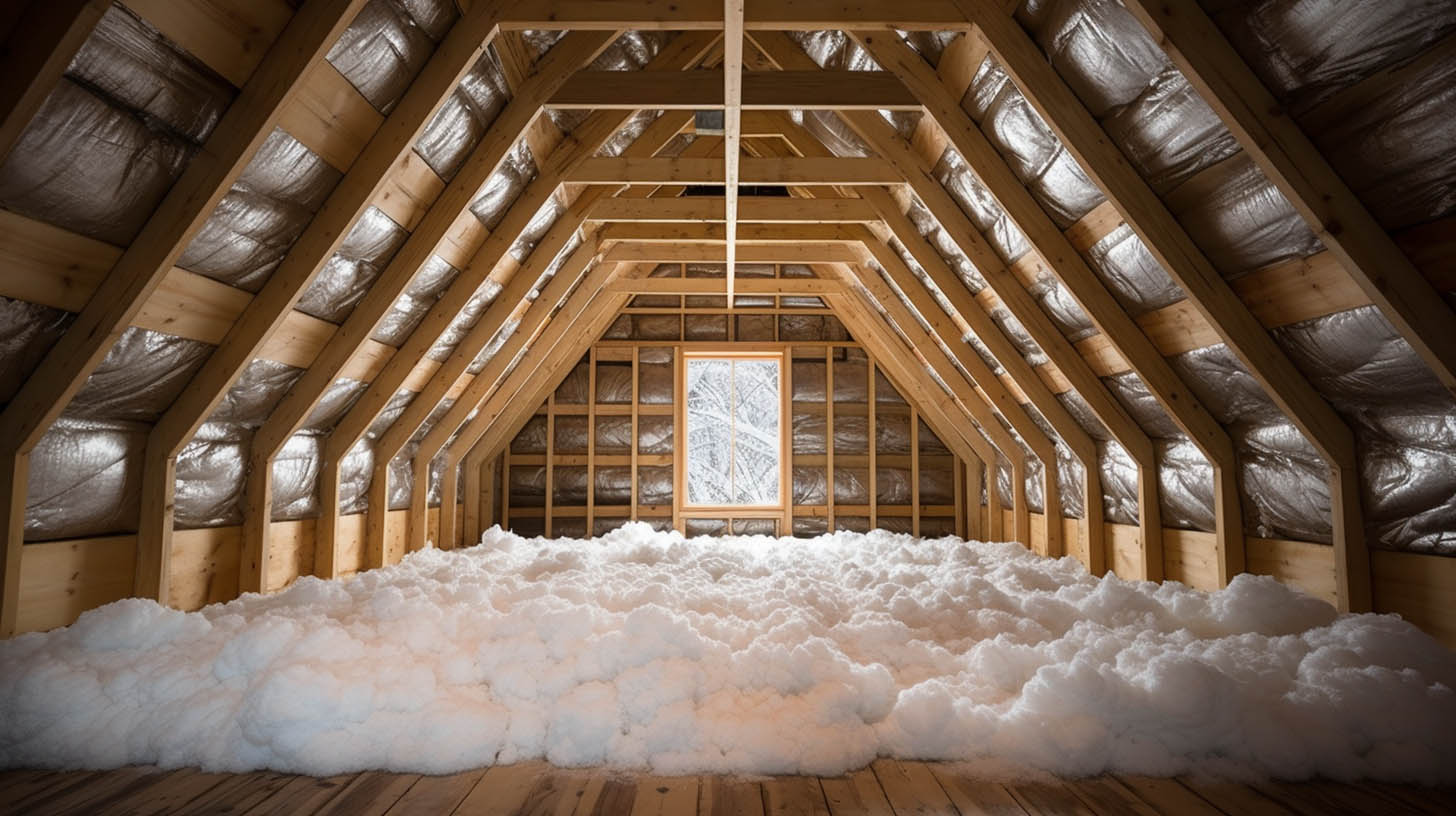
At Advanced Roofing & Construction, LLC, we recognize the superior qualities of blown-in insulation. This type is easy to install and combines the best features of other insulation materials. Blown-in insulation consists of numerous tiny air pockets that significantly enhance its insulating properties. It’s particularly effective in areas like Huntsville, AL, where maintaining a consistent indoor temperature is crucial.
One of the best examples of blown-in insulation is AttiCat® non-rigid fiberglass. This material adapts to every space it’s applied to, ensuring no area is left uninsulated. Unlike other types, it does not settle over time, thus maintaining its insulating properties indefinitely. Its non-rigid nature also allows easy access to wiring and mechanical systems, making it a practical choice for long-term home maintenance.
Making the Right Choice for Your Home
Selecting the right type of attic insulation is a decision that should be based on your specific needs and the construction of your home. In Huntsville, AL, where temperatures can vary significantly, choosing an insulation that provides a high R-value and durability is crucial. As a leading roofing company in Huntsville, AL, Advanced Roofing & Construction, LLC is committed to helping you make the best choice for your home. Our expertise in roofing and insulation ensures that your home remains comfortable, energy-efficient, and well-protected against the elements.
Cost and ROI: Comparing Insulation Options
Naturally, the best insulation for you depends largely on your situation and what you want out of its performance. Consider your climate zone and how reliant you are on climate control; solid insulation can save money through improving energy efficiencies even though it may cost more upfront. Also consider the longevity you’re after; mineral wools properly installed tend to last longer than spray foam. With insulation, the money you invest upfront can create comfort returns and energy savings that make the upgrade worth the price for some individuals.
Conclusion
Attic insulation is more than just a home improvement task; it’s an investment in your home’s future. By understanding the different types of insulation and their respective benefits, you can make an informed decision that enhances your home’s energy efficiency and comfort. Whether you’re considering spray foam, foam board, fiberglass batts, or blown-in insulation, remember that the right choice depends on your specific needs and the unique characteristics of your home’s roof. For expert guidance and installation services in Huntsville, AL, trust the professionals at Advanced Roofing & Construction, LLC.
FAQs
There are a bunch of attic insulations available on the market right now including spray foam, cellulose, fiberglass, and mineral wool. Each excel in their own rights and come in at different price points.
For an easy-to-install, energy-efficient insulation option for Northern Alabama, fiberglass is often a great option. Spray foam can also be effective in this climate region.
The R-value tackles how efficient an insulation is at keeping heat in; these values can vary quite a bit between insulation types.
Totally! Just ensure that they are layered correctly. Of note, be sure to remove any old/moldy insulation prior to bringing in new products regardless if they are the same type or different.
With proper installation, attic insulation can last anywhere from 10 years (more reserved for the spray foam options) to upwards of 100 years (with properly installed rock wool).
Which Insulation Fits North Alabama Homes?
For most Huntsville-area attics, blown-in fiberglass or cellulose paired with balanced roof ventilation wins on cost and summer performance. Our attic insulation service gives free assessments with straight answers on R-value and payback: 256-603-9171.